
WTF is wrong with this timeline?
First UXPin gave us real code prototypes. Then Claude Design showed that an agent can design directly with your design system. Shortly after, Open Design followed as the open-source take, turning any coding agent into a design engine, even for teams that only work with GitHub Copilot, for example. And now we got Paper.
This one feels different though.
The canvas is the website
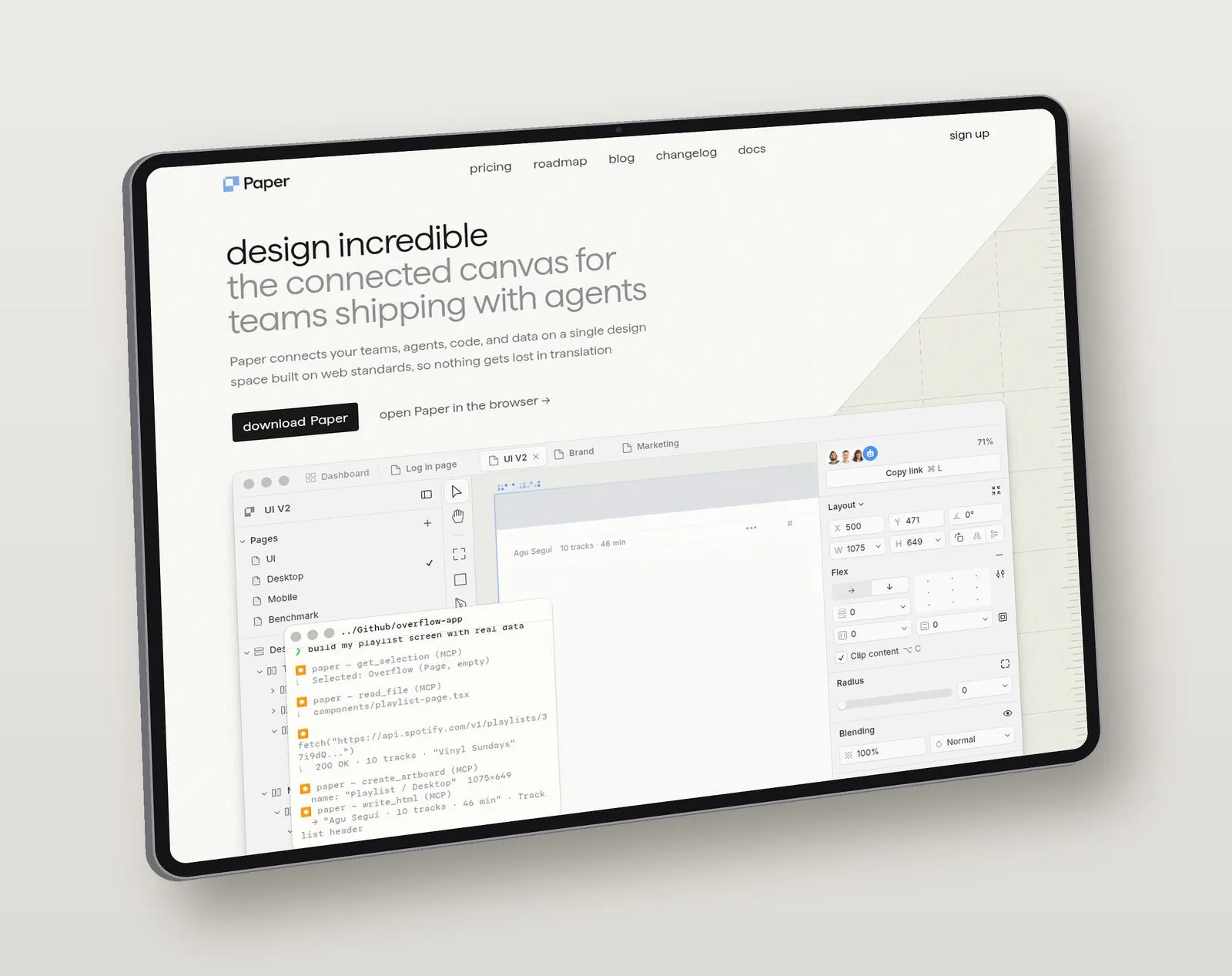
In Paper, the canvas isn’t a picture of a website. It is the website. Every frame is real HTML and CSS. And AI agents read and write on the canvas via MCP.
In the screenshot above you can see what that looks like: an agent in the terminal gets “build my playlist screen with real data”. It reads the current selection, opens the component file from the repo, fetches real data from an API and writes the artboard straight onto the canvas. No export, no plugin, no redraw.
Why not just connect Figma?
Sure, you can hook Figma up to Claude via CLI and MCP. But you’re still translating a proprietary format into code. Every handoff is a translation, and every translation loses something.
That’s the wrong architecture, and it no longer fits how we build today. I made the same point about design tokens and Figma: the source of truth belongs in code. A canvas built on web standards simply removes the translation step.
The real shift: agentic design systems
The tool itself matters less than what it enables. Agents build screens with your real components and tokens. Designers, developers and agents work on the same material.
No more handoff.
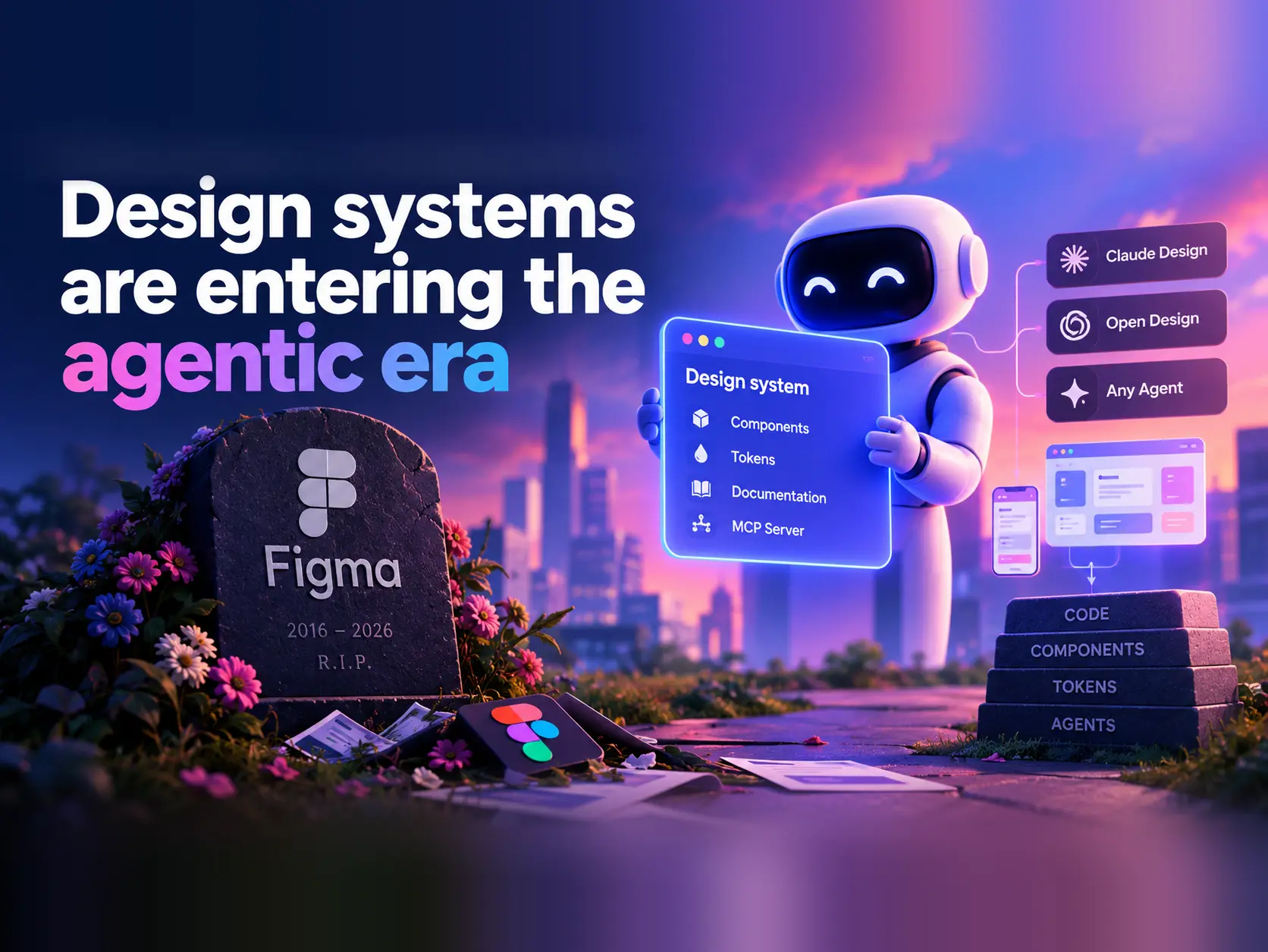
That’s exactly why your design system needs to be code, structured and readable for machines. I wrote more about that in Design Systems Are Entering the Agentic Era.
Would you switch?